Course
- Complete course in 320 hours
- No need to refer to any other source
 Compact RBI Combo 2027
No other source needed. Compact notes for Phase I and Phase II, a descriptive method built by engineers for engineers, tests your mentor evaluates, and the interview at the end.
Objective, 200 marks. GA is 80 of them.
Six months of current affairs in a 60-page capsule, made for RBI and free of what other bank exams need. Smart compilation and mnemonics for the facts.
65+ / 80 hit ratio on previous papersContext-based cards mapped to the capsule (e.g. Schemes › Health › Initiative), on your phone, with spaced repetition.
Revise on the goMnemonics for organisations and headquarters, AIIB versus NDB, currencies, banks and their headquarters. No useless information.
Mnemonics throughoutTwo tiers: first secure the cutoff from the high-yield topics, then, if Quant is your strength, push to 25+ out of 30.
By CAT 99.9 percentilersTopics ordered by return on effort: 20+ first, then 30+, then 45+ for those who want Reasoning as their strong area.
Up to 45 of 60Objective English for Phase I with the same high-yield approach.
30 marksESI, Finance and Management, English. Compact notes and short videos, plus every Ultra Compact module at no extra cost.
Compact notes for the whole static ESI in 89 pages, with short lecture videos on the high-yield parts. ESI weighs as much as Finance and Management together.
89 pagesSchemes in tables: associated bodies, objective, beneficiaries. Every year 30 to 35 marks come from schemes.
30–35 marks a yearCompact notes and fun videos. 30 hours are enough. Plus Ultra Compact Management: 78 tables, revised in a day.
30 hoursOnly what the exam asks, plus an Excel practice sheet that finishes 80% of bond numericals. Plus Ultra Compact Finance.
By Goldman Sachs and Barclays alumniAbout 120 marks of Phase II depend on current affairs. Six months, for objective and descriptive, in 50 to 60 pages.
50–60 pagesYou don’t have to be Shakespeare. Smart tips and deliberate practice for essay, précis and comprehension.
EvaluatedRBI Phase II is now mostly descriptive, and NABARD followed. You don’t need model answers to memorise. You need a way to build an answer for a question you have never seen.
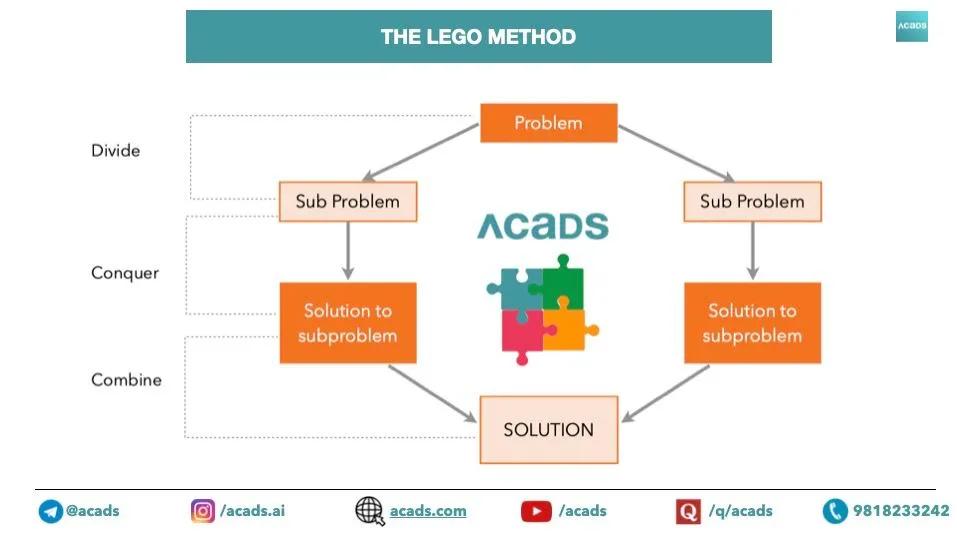
Break the question down, set aside what doesn’t matter, place it in the syllabus, reuse what you have solved before, then add detail. A 10-day cycle of diagnostic answers, one part at a time.
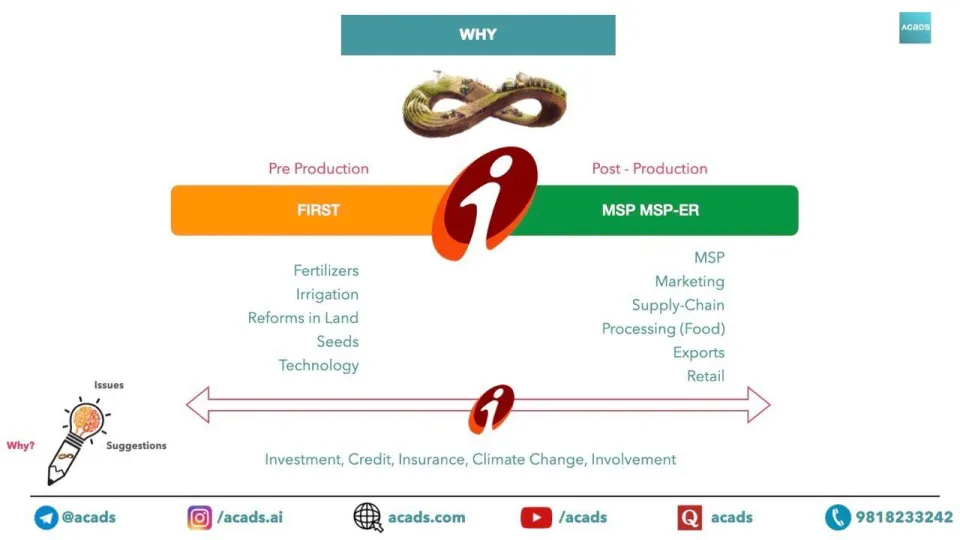
Three words for agriculture (FIRST, MSP MSP-ER, ICICI) open up 15 to 20 points. Templates exist for every major ESI and Finance and Management keyword.
Two Ds and four Cs: definitions and data, then committees, case studies, codes and mnemonics, and ready conclusions.
Questions from 20 years (2002 onwards), sorted into themes. In 2021 and 2022, 60 to 70% of the questions came from themes already asked.
One year, over 200 acads learners cleared Phase I, and only 41 submitted tests. The problem isn’t knowing that tests matter. It’s inertia. So we make the first step tiny.
One or two questions a day, each day on one part of answer writing. You get unexpected questions on purpose, so the fear goes before the exam does.
Six full-length Phase II tests after the mentoring and feedback rounds, for practice and confidence.
Every answer is evaluated by a mentor. No model-answer self-checking.
The board has three or four minutes with your biodata before you walk in. RBI has given interview marks from 2 to 73 out of 75 in a single year, so this stage decides selections.
How the board reads your biodata, and the Profile Index: how many technical versus profile questions to expect.
Profile-based and expected questions, with a mentor.
Knowledge, communication, answer structure and stress management; today’s score and potential score; positives, areas to work on, and expected questions.
By a team that has cleared IIM A, IIT, RBI, Wharton and ISB interviews.
21 techniques from 10 years of RBI, SEBI and IAS PYQs. Part of CRC only.
ESI, Management and Finance questions from 2002 onwards, sorted into themes.
Nudge mentorship, discipline and time management, and your progress in one place.
Preference goes to previous interview candidates, working candidates from banking and finance, and past acads learners.
The complete RBI Grade B course in 320 hours, with a mentor throughout.
Many thanks to your crisp notes and unique pedagogy, I've managed to clear the RBI Grade B Phase-II. Although I started preparing for Phase-II only after the Phase-I results were out, your notes and guidance have really enabled me to make the best use of my limited time.
Ultra compact management module is simply the best. Never felt so confident in management. Although I couldn't revise full, but managed to finish 40% while filling workbooks. I am sure that next time I will be able to revise in less than a day.
I could clear phase 2 only because of your compact notes and mnemonics. I started prep very late and was giving for experience. However, thanks to you I could clear phase 2.
It is built around mentorship and evaluation, which takes our time. So seats are limited and we talk to every applicant first.
Of course. A descriptive answer has no single right answer and everyone writes differently, so model answers to check yourself against don’t work. A mentor evaluates every answer.
We are engineers too. The Lego Method treats a question like an engineering problem: break it down and solve one piece at a time. Made for engineers, by engineers.
No. For Phase I, take a large test series with at least 10,000 participants. Our batches are smaller, so we focus on the descriptive paper.
Until Phase II of the next RBI Grade B exam.
Mentorship-based courses are rarely discounted. Ask us before you apply.