DA SC PTC PDSArticle 20PDS: Post facto law 20(1), Double jeopardy 20(2), Self-incrimination 20(3). The exceptions: P → PTC: Preventive detention, Trial, Civil cases. D → DA: Departmental proceedings, Administrative authorities. S → SC: Specimens, Civil proceedings.
One page of the polity book in one sentence: the (DA) Supreme Court (SC) is a PaTaCa because it introduced PDS.
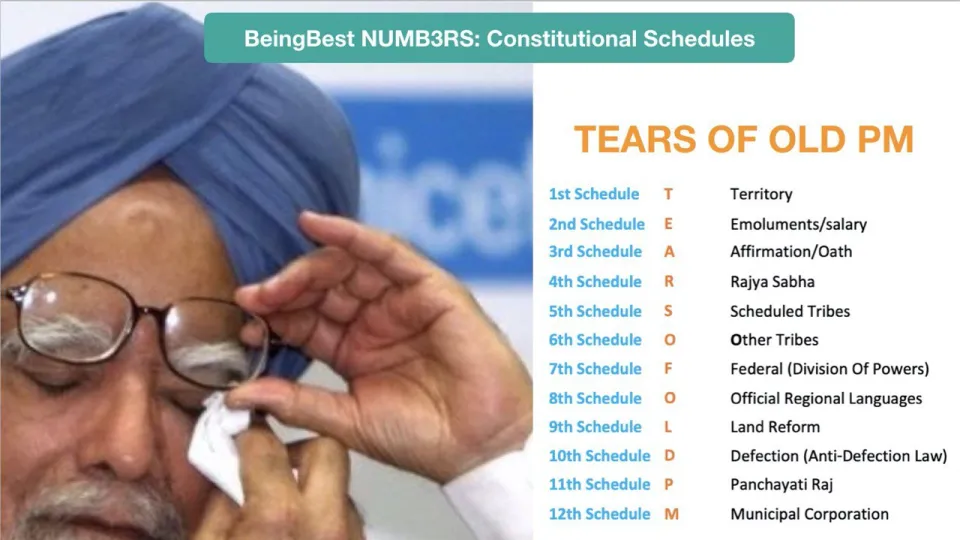 TEARS OF OLD PMThe 12 Schedules
Territory, Emoluments, Affirmation (oaths), Rajya Sabha, Scheduled Tribes, Other tribes, Federal division of powers, Official languages, Land reform, Defection, Panchayati Raj, Municipal corporations.
All twelve Schedules in order, in four words, and one picture of the old PM.
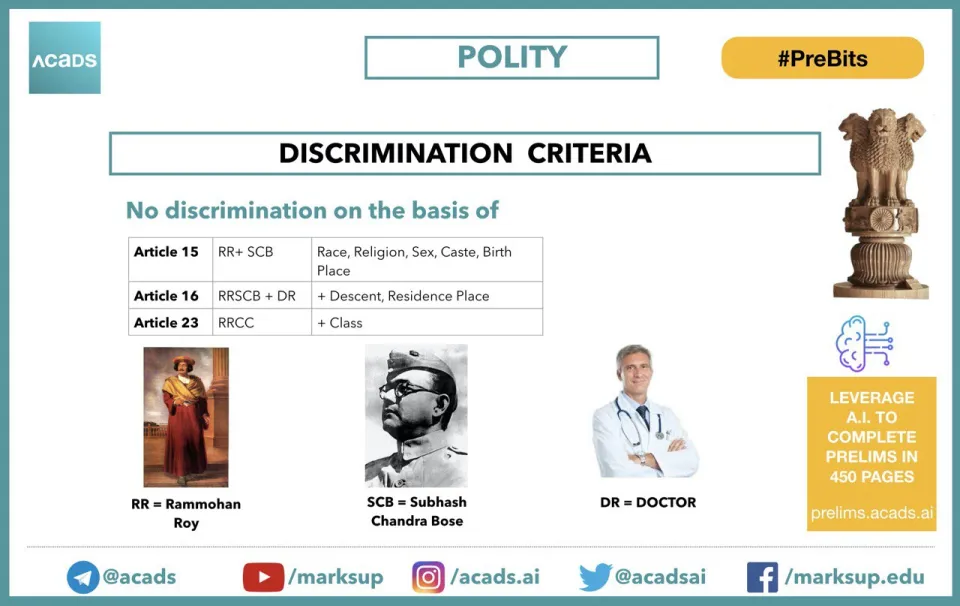 RR SCB DRNo discrimination: Articles 15, 16 and 23
Article 15: RR + SCB, Race, Religion, Sex, Caste, Birthplace. Article 16: RRSCB + DR, adds Descent and Residence. Article 23: RRCC, Race, Religion, Caste, Class. RR is Rammohan Roy, SCB is Subhash Chandra Bose, DR is a doctor.
Three Articles that look alike, told apart by three faces.
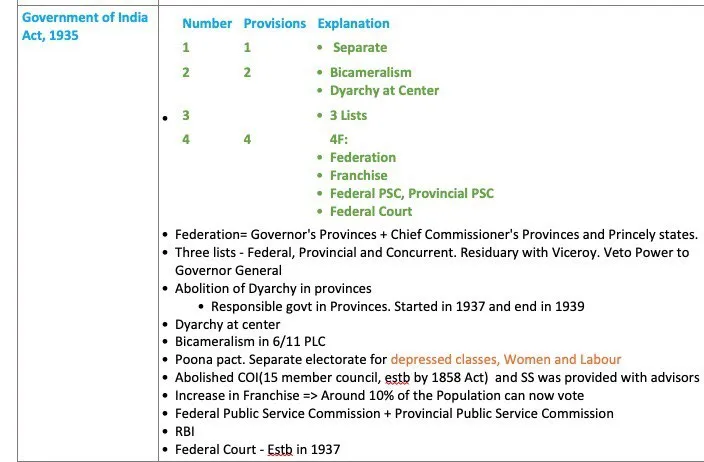 1-2-3-4Government of India Act, 1935
3 + 5 = 8 provisions. 1 (alone): separate electorates. 2: bicameralism and dyarchy. 3: three lists. 4 Fs: Federation, Franchise, Federal and Provincial PSCs, Federal Court.
The 1-2-3-4 trick was asked directly in Prelims 2021 and again in 2024.
335 · 350A · 351Directives outside Part IV335: the 5 looks like an S, so SC/ST claims to services. 350A: A for Amma, the mother, so mother tongue. 351: write Hindi as H1ndi.
Students remember the topics but mix up the Articles.
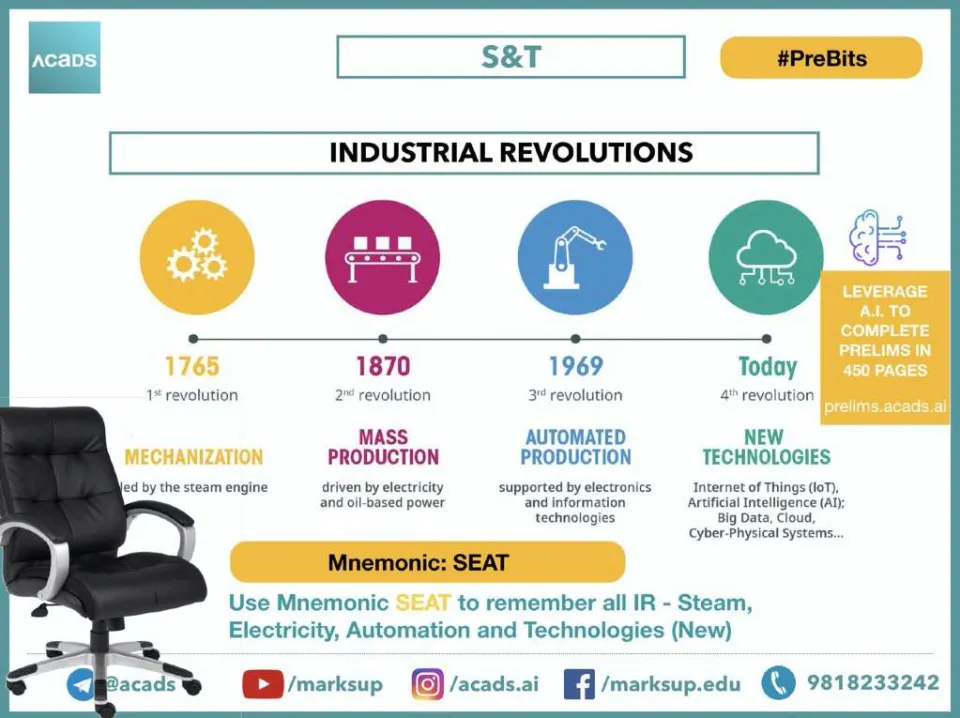 SEATThe four industrial revolutions
Steam engine, Electricity (mass production), Automation, Technologies like AI.
IR 4.0, AI and cloud keep appearing in Prelims, and the frame works in Mains and Essay too.
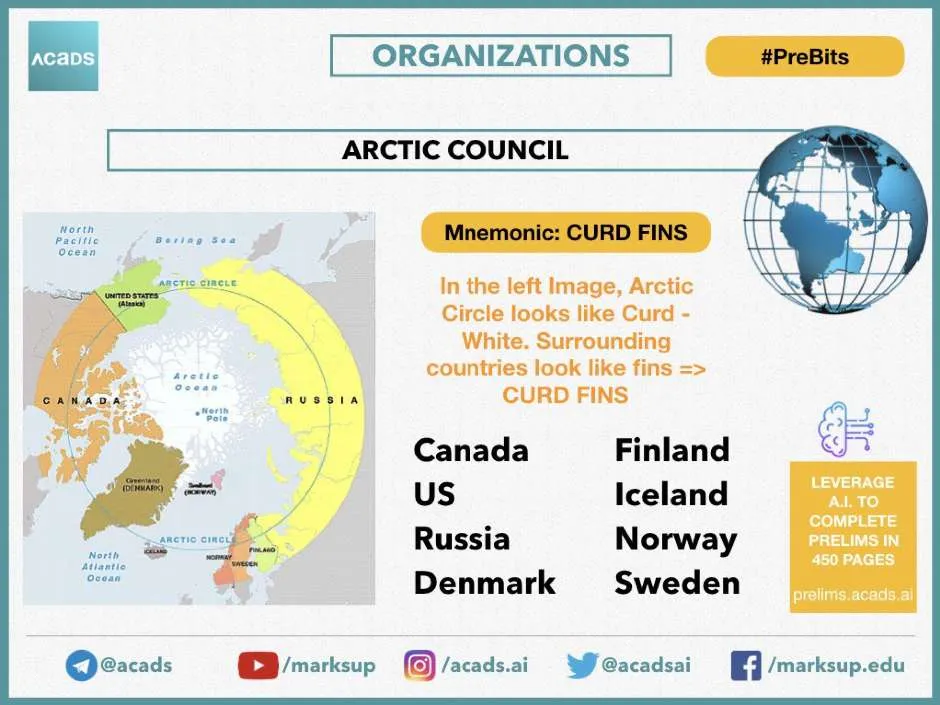 CURD FINSArctic Council
Canada, US, Russia, Denmark, Finland, Iceland, Norway, Sweden. In the map, the Arctic Circle looks like curd: white.
One of UPSC’s favourites. No explanation required.
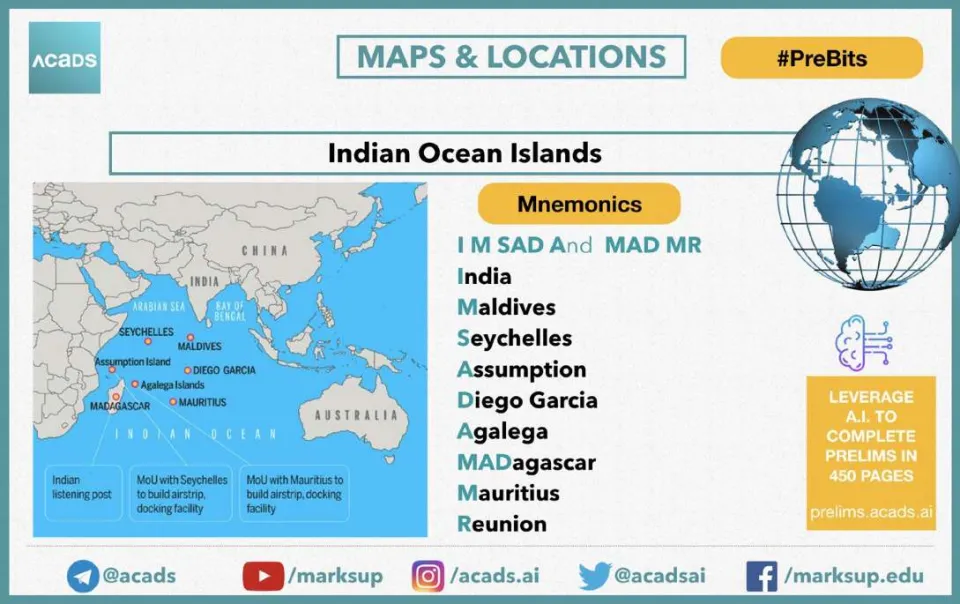 I M SAD And MAD MRIndian Ocean islands, north to south
India, Maldives, Seychelles, Assumption, Diego Garcia, Agalega, MADagascar, Mauritius, Reunion.
A very expected question in Prelims.
MA MBASeas from the Mediterranean to the AzovMediterranean, Aegean, Marmara, Black, Azov.
From Compact Prelims: important global locations, seas and oceans.
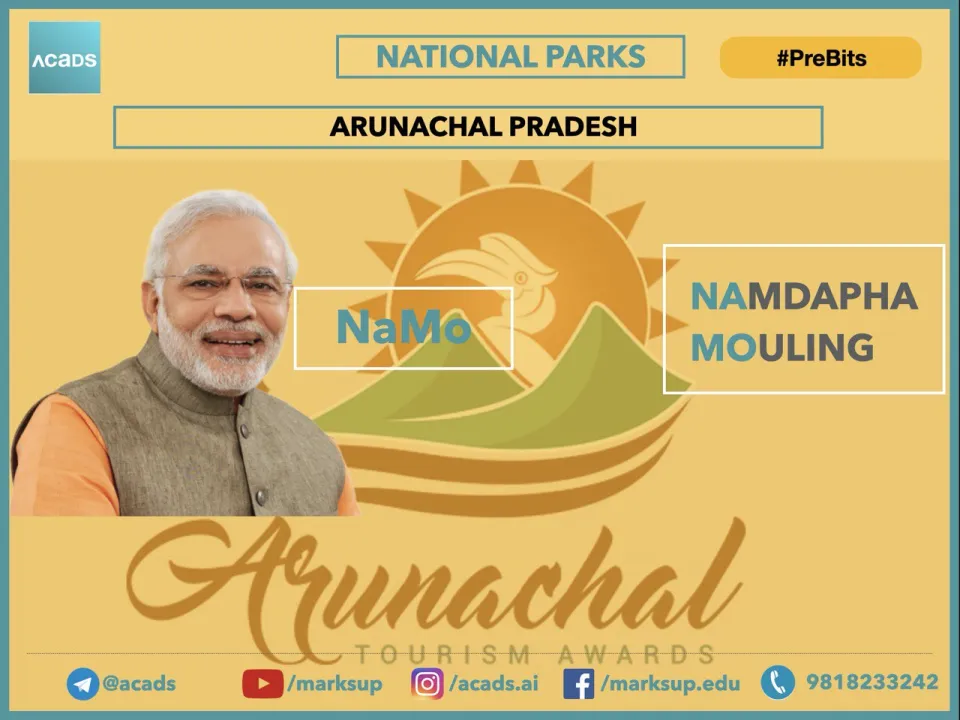 NaMoNational parks of Arunachal Pradesh
NAMdapha and MOuling. China claims Arunachal, but strong-headed leaders like NaMo keep it scared.
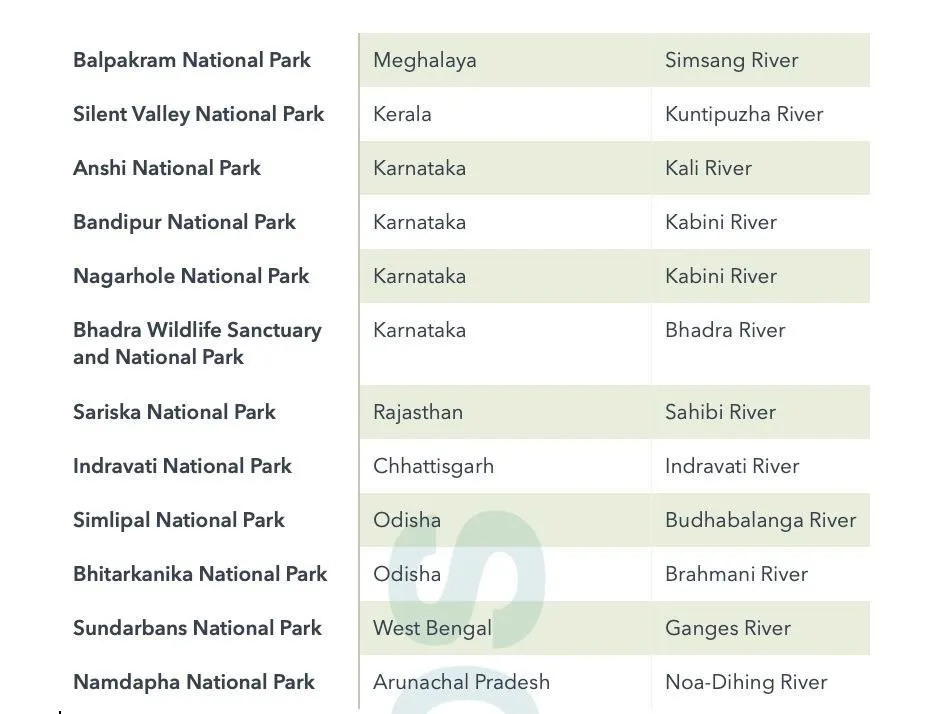
Remember a state’s parks as one word: NaMo for Arunachal, DR KuSuM for Rajasthan, DR Manak for Assam.
DR KuSuM · DR ManakNational parks of Rajasthan and AssamRajasthan: Desert, Ranthambhore, Keoladeo, Sariska, Mukundra. Assam: Dibru-Saikhowa, Rajiv Gandhi (Orang), Manas, Nameri, Kaziranga.
Instead of memorising every name, memorise NaMo, DR KuSuM and DR Manak.
SuMmeRTiger reserves of RajasthanIt is always SuMmeR in Rajasthan: Sariska, Mukundra, Ranthambore.
States and their parks are asked year after year.
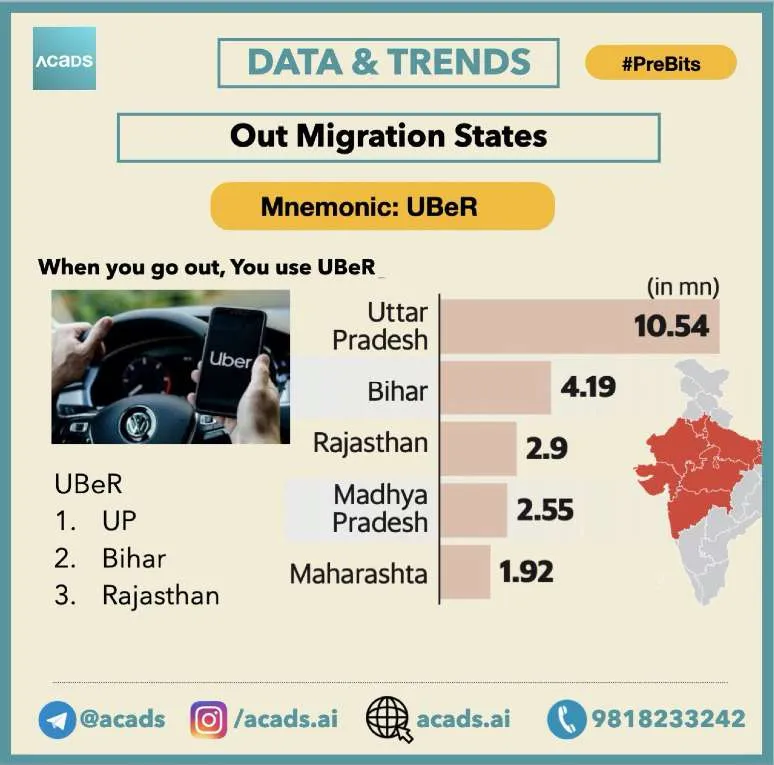 UBeROut-migration states
When you go out, you use UBeR: Uttar Pradesh, Bihar, Rajasthan.
For Mains, draw India and mark these states under out-migration.
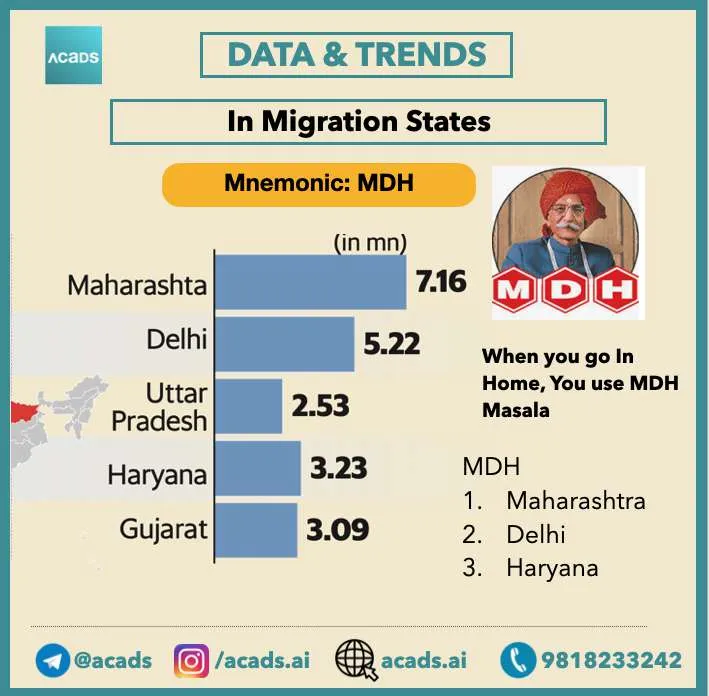 MDHIn-migration states
When you go in home, you use MDH masala: Maharashtra, Delhi, Haryana.
Pair it with UBeR on the same map of India.
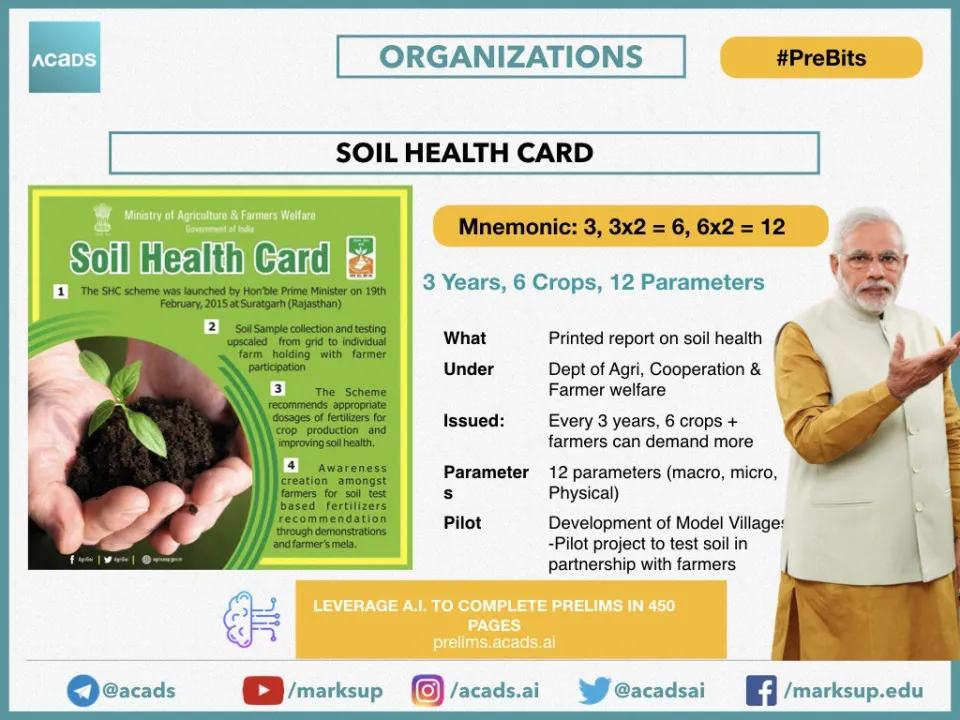 3 · 6 · 12Soil Health Card
3, 3×2 = 6, 6×2 = 12: issued every 3 years, for 6 crops, testing 12 parameters.
UPSC asks schemes down to the numbers, targets and beneficiaries.
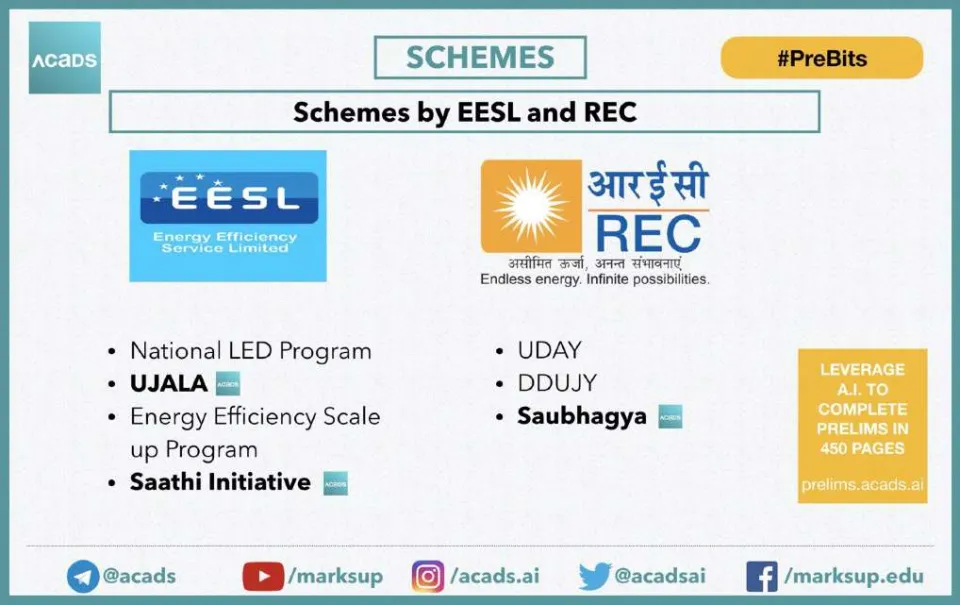 YSchemes by REC
Every REC scheme has a Y in its name: UDAY, DDUGJY, Saubhagya. EESL’s are the energy-efficiency ones: UJALA, National LED Programme, Street Lighting.
Read schemes actively: form linkages and tricks, or no amount of rereading helps.
CCCSDGs 11, 12 and 1311 looks like twin towers: Cities. 12: someone eating 12 hours a day: Consumption. 13 is unlucky: Climate change.
Numbers are the hardest to remember. Give them a picture.
Cool B&WInflation indices and publishersAny index with Labour or Worker in its name: Labour Bureau. GIC (GDP deflator, IIP, CPI): CSO, MoSPI. DIPP sounds like DP, which looks cool in black and white: Core industries, BSPI, WPI.
Who publishes which index is a classic statement question.
SAME HEROPriority sector lendingSocial infrastructure, Agriculture, MSME, Education, Housing, Exports, Renewable energy, Others.
Every category, in two words.
ALTeRPoverty line committeesAlagh, Lakdawala, Tendulkar, Rangarajan.
Quote committees in GS 1 and GS 2 answers on poverty for an edge.
BAHANACivil services reform committeesBaswan, ARC 1, Hota, Alagh, Nath, ARC 2.
Use two or three in the body, one in the solutions and one in the conclusion.
MP WF MPDisaster prevention approachMulti-disciplinary, Proactive, Well-structured, Fail-safe, Multi-sectoral, Participatory. (MP’s WiFe is MP.)
Use it in the conclusion of any disaster management answer.
GOT FQSCitizen-centric governanceGrievance redressal, citizen Oriented, Time-bound delivery, citizen Friendly, Quality improvement, Service standards.
Replicability: use it for citizen charters, good governance, the benefits of data to citizens, the way forward on any bill, and civil society.
HEAT CELLHow to inculcate a valueCode of conduct, code of ethics, ethical and value training, developing EI, accountability mechanisms (RTI, CVC, citizen charter), higher values like integrity and probity, learning from the lives of leaders, leading by example.
Write the specific points first, then these generic ones to make the answer multi-dimensional.
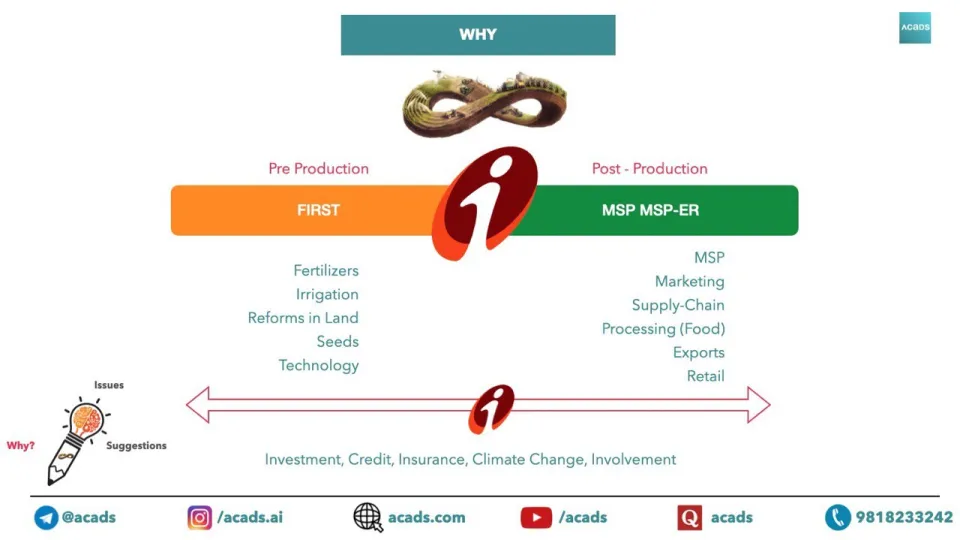 FIRST · MSP MSP-ERDimensions of agriculture
Before production, FIRST comes first: Fertiliser, Irrigation, Reforms in land, Seed, Technology. After it, MSP and more MSP: MSP, Marketing, Supply chain, Processing, Exports, Retail.
A mental model that generates a multi-dimensional agriculture answer in minutes.
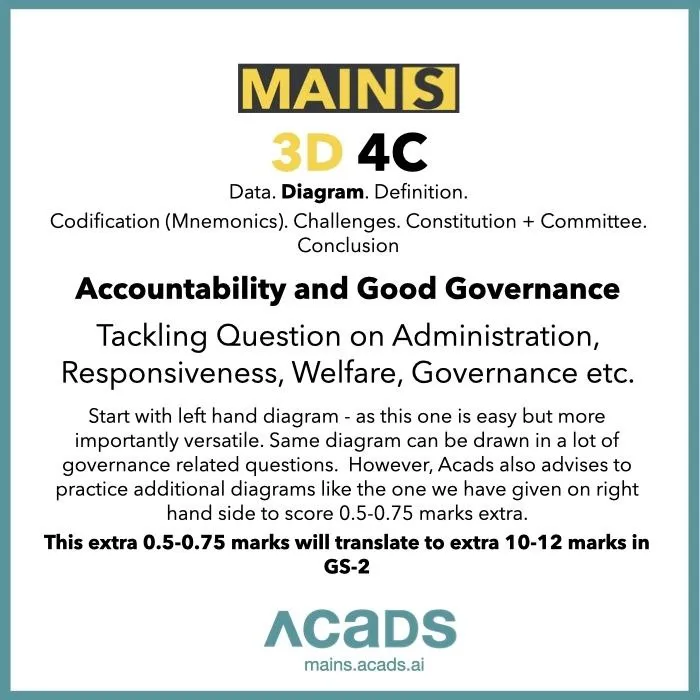 3D4CSubstantiation in Mains
Data, Diagram, Definition; Codification (mnemonics), Constitution (Articles), Committees and cases, Conclusion.
How 450+ in GS is reached: substantiate every subpart.
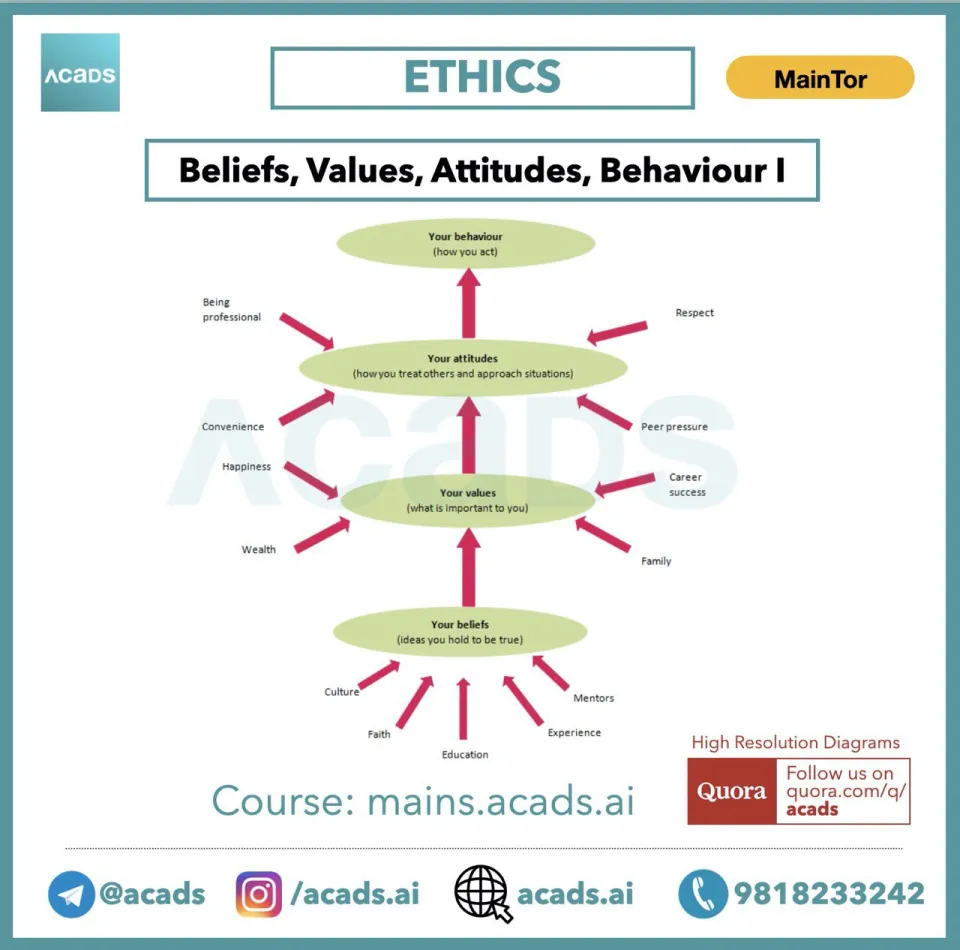 BVABThe four keywords of Ethics
Beliefs, Values, Attitudes, Behaviour.
Keep the definitions and diagrams simple. A relevant diagram adds 1 to 1.5 marks a question.